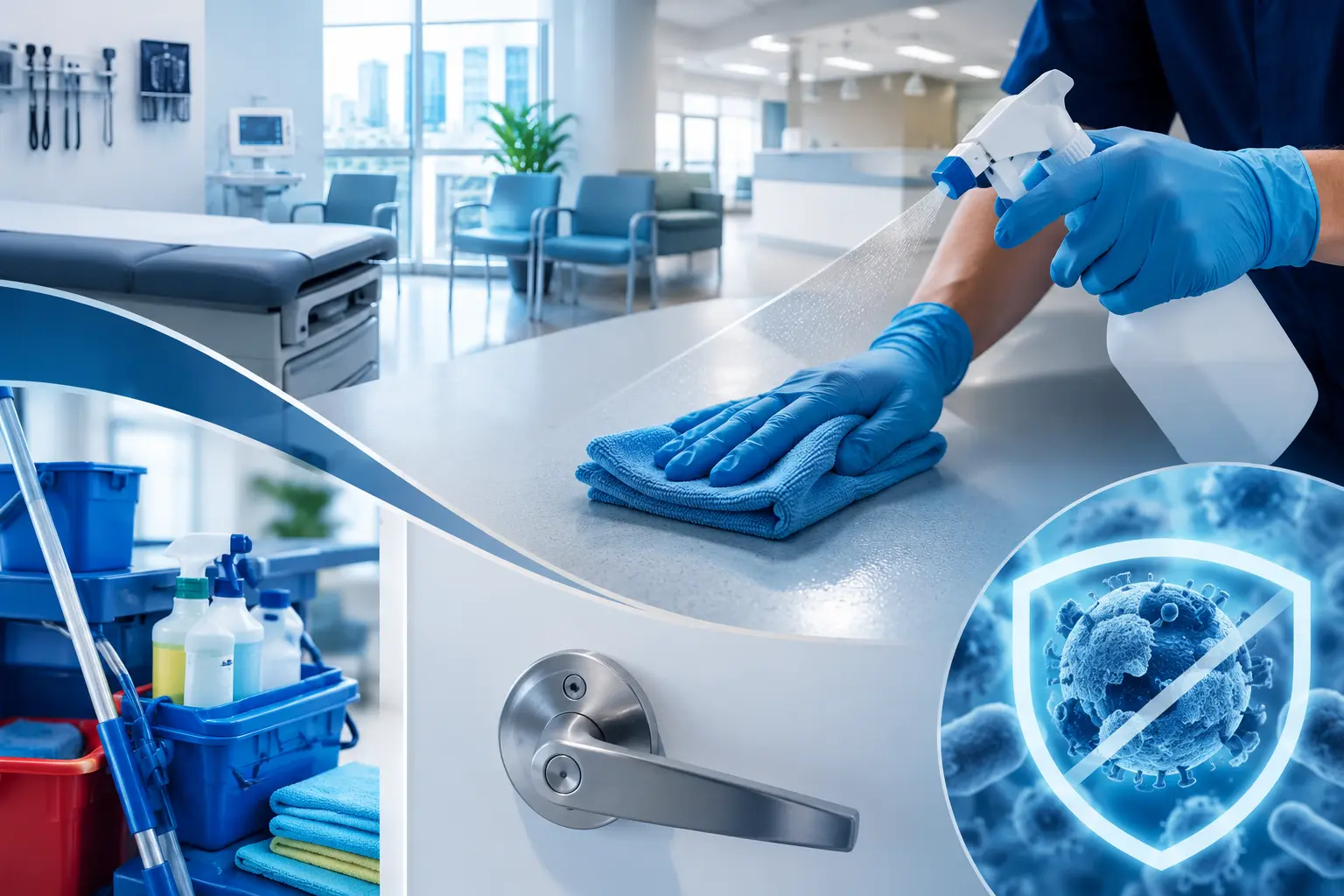
Healthcare-associated infections (HAIs) remain one of the most significant challenges facing hospitals, clinics, dental practices, urgent care centers, and physician offices. Every day, patients, healthcare workers, and visitors touch hundreds of surfaces that can harbor harmful pathogens. Without rigorous cleaning and disinfection protocols, these microorganisms can spread rapidly throughout a healthcare facility.
For medical offices in Miami, Florida, the challenge is even greater. High patient volumes, humid environmental conditions, flu seasons, respiratory illness outbreaks, and increasing patient expectations require healthcare facilities to maintain the highest standards of cleanliness and infection prevention.
Professional healthcare cleaning is no longer simply about appearance. It has become a critical component of patient safety, regulatory compliance, risk management, and healthcare quality.
This guide explains how healthcare facilities prevent cross-contamination through advanced cleaning strategies, what current 2025-2026 infection prevention standards recommend, and why partnering with a specialized medical office cleaning service in Miami is essential.
What Is Cross-Contamination in Healthcare?
Cross-contamination occurs when harmful microorganisms are transferred from one surface, person, object, or environment to another.
In healthcare settings, cross-contamination can occur through:
- Contaminated hands
- Medical equipment
- Shared patient spaces
- High-touch surfaces
- Cleaning tools used incorrectly
- Airborne particles
- Improper waste handling
- Insufficient disinfection procedures
Pathogens commonly involved include:
- MRSA (Methicillin-Resistant Staphylococcus Aureus)
- Clostridioides difficile (C. diff)
- Influenza viruses
- RSV
- Norovirus
- COVID-19 variants
- Multidrug-resistant organisms (MDROs)
Even a single contaminated surface can become a transmission point affecting multiple patients and staff members.
Why Preventing Cross-Contamination Matters
Healthcare organizations worldwide continue emphasizing environmental hygiene as a frontline defense against infection transmission.
Modern infection prevention strategies recognize that environmental cleaning directly impacts:
- Patient outcomes
- Hospital-acquired infection rates
- Regulatory compliance
- Staff safety
- Public trust
- Operational efficiency
Recent healthcare guidance continues to reinforce that surface contamination plays a significant role in disease transmission, making professional cleaning and disinfection essential components of infection prevention programs.
Healthcare facilities that invest in specialized cleaning protocols often experience:
- Reduced infection risks
- Improved patient satisfaction
- Better inspection outcomes
- Lower liability exposure
- Enhanced workplace safety
The Science Behind Cross-Contamination Prevention
Effective healthcare cleaning follows a structured process designed to break the chain of infection.
The chain typically includes:
| Infection Element | Description |
|---|---|
| Infectious Agent | Bacteria, virus, fungus, or pathogen |
| Reservoir | Surface, person, equipment, or environment |
| Exit Portal | How pathogens leave the source |
| Transmission Route | Contact, airborne, droplet, or indirect |
| Entry Portal | How pathogens enter a new host |
| Susceptible Host | Patient, visitor, or staff member |
Professional cleaning targets multiple points in this chain, reducing opportunities for transmission.
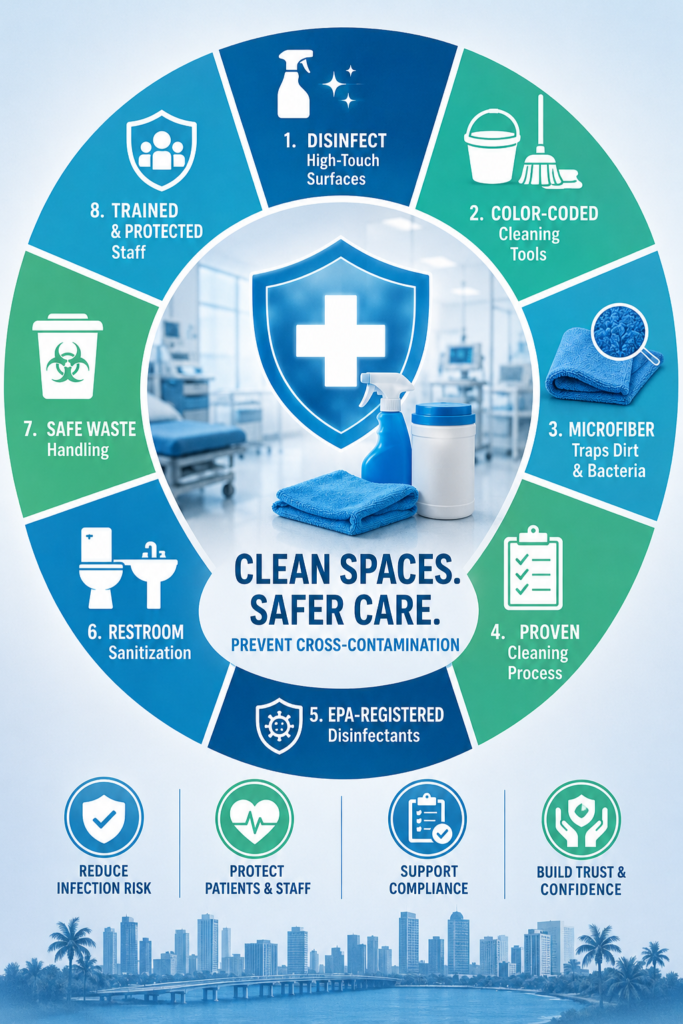
1. High-Touch Surface Disinfection
Healthcare cleaning teams focus heavily on high-touch surfaces because they present the greatest risk of pathogen transfer.
Common high-touch surfaces include:
- Door handles
- Reception desks
- Patient chairs
- Examination tables
- Light switches
- Elevator buttons
- Computer keyboards
- Medical carts
- Telephones
- Handrails
- Waiting room furniture
Studies consistently show that pathogens can survive on these surfaces for hours, days, or even weeks.
Professional cleaners use healthcare-grade disinfectants with verified efficacy against a broad spectrum of microorganisms.
2. Color-Coded Cleaning Systems
One of the most effective methods of preventing cross-contamination is using color-coded cleaning tools.
Different colors are assigned to specific areas:
| Color | Area |
|---|---|
| Red | Restrooms |
| Yellow | Clinical Areas |
| Blue | General Areas |
| Green | Food Preparation Areas |
This system prevents mops, cloths, and equipment used in contaminated areas from being transferred elsewhere.
Healthcare cleaning providers serving Miami medical facilities frequently implement strict color-coding programs to minimize risk.
3. Microfiber Technology Reduces Pathogen Spread
Traditional cotton cleaning materials can spread contaminants from one surface to another.
Modern healthcare cleaning relies heavily on microfiber technology because microfiber:
- Captures microscopic particles
- Traps bacteria effectively
- Reduces chemical usage
- Improves cleaning efficiency
- Supports infection prevention efforts
Microfiber systems have become standard practice in many healthcare environments due to their superior contamination control capabilities.
4. Proper Cleaning Sequence and Workflow
Professional healthcare cleaning follows a highly structured workflow.
Best practices include cleaning:
From Clean Areas to Dirty Areas
This prevents pathogens from spreading into cleaner environments.
From High Areas to Low Areas
Dust and particles naturally fall downward.
From Low-Risk Areas to High-Risk Areas
This minimizes contamination transfer.
Using One-Way Cleaning Paths
Avoids recontaminating previously disinfected surfaces.
These seemingly simple procedures dramatically reduce cross-contamination risks.
5. EPA-Registered Healthcare Disinfectants
Not all disinfectants are suitable for healthcare settings.
Medical facilities require products specifically designed to eliminate pathogens commonly encountered in healthcare environments.
Professional medical office cleaning services use disinfectants that:
- Meet healthcare standards
- Provide broad-spectrum efficacy
- Maintain proper dwell times
- Support infection control goals
- Align with facility protocols
Proper disinfectant selection is one of the most important components of an effective cleaning program.
6. Enhanced Cleaning of Waiting Rooms
Waiting areas represent one of the highest-risk zones for pathogen transmission.
Patients may arrive with:
- Respiratory illnesses
- Viral infections
- Gastrointestinal diseases
- Undiagnosed contagious conditions
Professional cleaning protocols focus on:
- Chair arms
- Check-in counters
- Touchscreens
- Pens and clipboards
- Beverage stations
- Children’s play areas
Frequent disinfection helps reduce transmission opportunities between visitors.
7. Restroom Sanitization Protocols
Healthcare restrooms require specialized cleaning procedures due to increased contamination risks.
Professional teams address:
- Toilets
- Sinks
- Faucets
- Door handles
- Soap dispensers
- Waste receptacles
Many pathogens commonly associated with healthcare-associated infections can spread through restroom contamination if cleaning procedures are inadequate.
8. Air Quality and Environmental Hygiene
Cross-contamination is not limited to surfaces.
Airborne particles can also contribute to pathogen transmission.
Modern healthcare cleaning programs often include:
- HEPA-filter vacuuming
- Dust control procedures
- HVAC vent cleaning support
- Air quality monitoring strategies
- Reduced particulate contamination
For Miami healthcare facilities, humidity management can also play an important role in maintaining a healthier indoor environment.
9. Safe Medical Waste Handling
Improper waste disposal can create serious contamination risks.
Healthcare cleaning teams are trained to handle:
- Sharps containers
- Biohazard waste
- Regulated medical waste
- Contaminated disposable materials
Strict procedures ensure waste does not become a source of cross-contamination.
10. Staff Training and Infection Control Education
The most advanced cleaning products are ineffective without proper training.
Professional healthcare cleaning companies invest heavily in:
- Infection prevention education
- Bloodborne pathogen training
- OSHA compliance training
- PPE protocols
- Chemical handling procedures
- Emergency response procedures
Continuous education helps ensure cleaning personnel remain current with evolving healthcare standards.
The Role of Technology in Healthcare Cleaning
Healthcare cleaning continues to evolve through technology-driven solutions.
Many leading facilities now incorporate:
Electrostatic Disinfection
Provides uniform disinfectant coverage across complex surfaces.
ATP Surface Testing
Measures cleaning effectiveness using biological contamination indicators.
Digital Cleaning Verification
Tracks cleaning completion and quality assurance metrics.
UV-C Disinfection Support
Used in certain healthcare environments as an additional infection prevention measure.
Smart Monitoring Systems
Help facilities document compliance and cleaning performance.
Technology allows healthcare organizations to validate cleaning effectiveness rather than relying solely on visual inspections.
Common Areas Most Vulnerable to Cross-Contamination
Healthcare facilities often prioritize cleaning in:
Reception Areas
Constant visitor traffic creates elevated contamination risks.
Exam Rooms
Direct patient contact requires meticulous disinfection.
Nurse Stations
High staff interaction increases touchpoint exposure.
Break Rooms
Shared food preparation areas can spread pathogens.
Restrooms
Frequent use makes them high-priority sanitation zones.
Laboratories
Specialized contamination control procedures are essential.
What Miami Medical Offices Should Look for in a Healthcare Cleaning Service
Not all commercial cleaning companies are qualified to clean healthcare environments.
Medical offices in Miami should seek providers that offer:
Healthcare-Specific Experience
Medical facilities require different procedures than standard office buildings.
Infection Prevention Expertise
Cleaning staff should understand contamination pathways and healthcare protocols.
Documented Quality Assurance
Reliable providers maintain inspection and verification programs.
Flexible Scheduling
Cleaning should occur without disrupting patient care.
Regulatory Awareness
Healthcare environments face higher standards than traditional commercial spaces.
Customized Cleaning Plans
Each facility has unique risks, patient volumes, and operational requirements.
Why Specialized Medical Office Cleaning Matters in Miami
Miami’s healthcare sector serves a diverse population that includes:
- Primary care clinics
- Specialty practices
- Dental offices
- Urgent care centers
- Surgical centers
- Rehabilitation facilities
These environments demand cleaning programs specifically designed for healthcare operations.
Professional medical office cleaning services help facilities:
- Reduce contamination risks
- Improve patient confidence
- Support infection prevention programs
- Maintain regulatory readiness
- Create safer healthcare environments
A clean facility is often one of the first indicators patients use to evaluate the quality and professionalism of a healthcare provider.
Frequently Asked Questions
How often should a medical office be professionally cleaned?
Most healthcare facilities require daily cleaning, with high-touch surfaces disinfected multiple times throughout the day depending on patient traffic.
Can regular office cleaning prevent cross-contamination?
Standard commercial cleaning is often insufficient for healthcare environments. Medical facilities require specialized protocols, products, and training.
What areas should receive the most attention?
Exam rooms, reception areas, restrooms, nurse stations, and frequently touched surfaces typically require the highest level of attention.
Does professional cleaning help reduce infection risks?
Environmental cleaning is recognized as an important component of comprehensive infection prevention programs and helps reduce opportunities for pathogen transmission.
Why is healthcare cleaning different from commercial cleaning?
Healthcare cleaning focuses heavily on infection prevention, contamination control, regulatory compliance, and patient safety rather than appearance alone.
Conclusion
Preventing cross-contamination requires far more than routine janitorial services. Healthcare facilities rely on evidence-based cleaning protocols, trained personnel, advanced disinfection technologies, and strict infection prevention procedures to protect patients, visitors, and staff.
As healthcare standards continue evolving through 2025 and 2026, environmental hygiene remains one of the most effective defenses against pathogen transmission. From high-touch surface disinfection and microfiber technology to air quality management and healthcare-specific staff training, every aspect of a professional cleaning program contributes to safer patient care.
For medical offices, clinics, dental practices, and healthcare facilities throughout Miami, partnering with an experienced healthcare cleaning provider is an investment in patient safety, regulatory compliance, operational excellence, and long-term reputation.